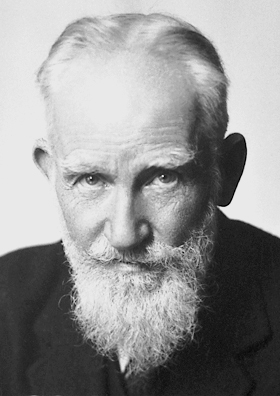
‘Those who can, do. Those who cannot, teach’ is an accusation often thrown at teachers, usually by those who despise the profession or are intimidated by it. The intention is to belittle and diminish the teacher by suggesting that a true practitioner would be busy earning a living by doing the thing s/he does best while the second-rate pass on what knowledge they have to gullible students. Many people know that the phrase apparently originated with George Bernard Shaw (1856-1950) who wrote ‘He who can, does. He who cannot, teaches’ as part of The Revolutionist’s Handbook and Pocket Companion by John Tanner, M.I.R.C (Member of the Idle Rich Class) which was referenced within Shaw’s 1903 play Man and Superman.
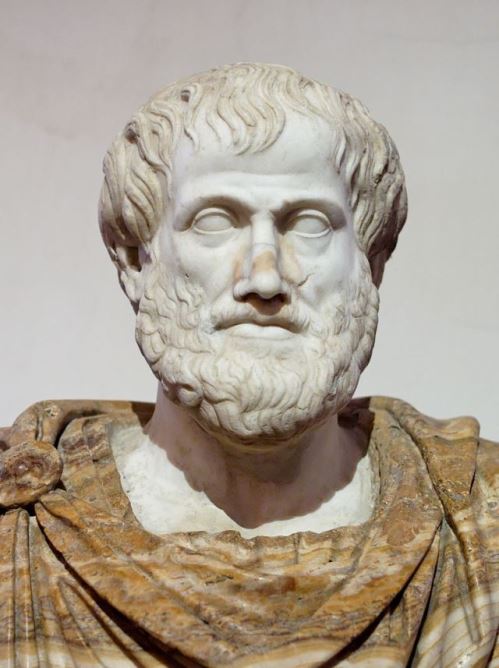
Shaw attributes the words to the character John (Jack) Tanner, a ‘champagne socialist’ who talks a good revolution but does little about it, so as to satirise the kind of socialist Shaw reviled. But how original is the thought? Some believe that it is a re-working of Aristotle’s ‘Those that know, do. Those that understand, teach’, but this phrase appears nowhere in his extant texts, and it is more likely that Aristotle’s ‘quote’ has been written in such a way as to channel Shaw’s words. There is, however, a section within Aristotle’s Metaphysics (Book 1) work where the old Greek discusses experience (as in the ability ‘to do’) and ‘art’ (as in the full understanding of what is being done) and concludes that the ‘artists’ are in a better position to teach because they have they fullest comprehension of the subject whereas the ‘doer’ specialises in one small part.
Saint Thomas Aquinas (1225-1274) in his Commentaries refined this by arguing that the presence of knowledge, when taught correctly, ‘causes knowledge in another’, but the person of experience alone will teach according to his or her beliefs or opinions. The liberal interpretation of these arguments is that the ‘teacher’ knows more than the ‘doer’ because he or she has greater conceptual knowledge as well as the ability ‘to do’.
Nevertheless, the insult will still carry its sting, but at least there are also some biting ripostes. In reply to the original barb, try “…and those who can’t teach, criticise (or supervise)”, or “…and those who haven’t read very much rely on clichés.” A favourite within the profession itself is “…and those who can’t teach become managers, and those who can’t manage become government inspectors.”
 The History Room
.
LikeLike
Some years ago, at a small party of mostly science professionals, a bank officer, who mentioned several times his banking institution and his holding an MBA degree, offered this retort upon learning I was in graduate school and intended to teach college. Despite his wife being present in another part of the room he was striving to impress the women who were listening to him and that was the motivation for his comment. (His wife eventually divorced him, chuckle.) I responded by saying, despite being familiar with Shaw’s writings (and having attended the above play) I was just not a fan of him. As I expected, the banker as I could tell from his blank look and silence that he had no idea what I was saying. So, I followed up with “I mean George Benard Shaw, the author of your statement, but not being a teacher but a doer you wouldn’t know about things like that.” The women burst out in laughter, and he hummed and hawed in embarrassment. I do not like engaging in such exchanges, but I had seen too many arrogant, ignorant blowhards from the business world act and speak in disparagement of teaching and the humanities, so I gave it to him with great effect.
LikeLike